
Short answerLED is the better pick for most homes. The U.S. Department of Energy says LED holiday light strands use about 70 percent less energy than incandescent strands, and they are sturdier and last longer. Incandescent bulbs still have a softer, warmer glow that some people prefer on older houses.
Energy use
The Department of Energy says LED holiday strands consume about 70 percent less energy than conventional incandescent strands. On a big roofline running six hours a night for six weeks, that adds up, and it also means more lights can share one outlet before you run out of capacity.
Durability
LED bulbs are sturdier than glass incandescent bulbs, according to the same DOE article. That matters on a roof where bulbs get bumped by wind, branches and ladders. Fewer broken bulbs means fewer dark gaps in the line.
Color and glow
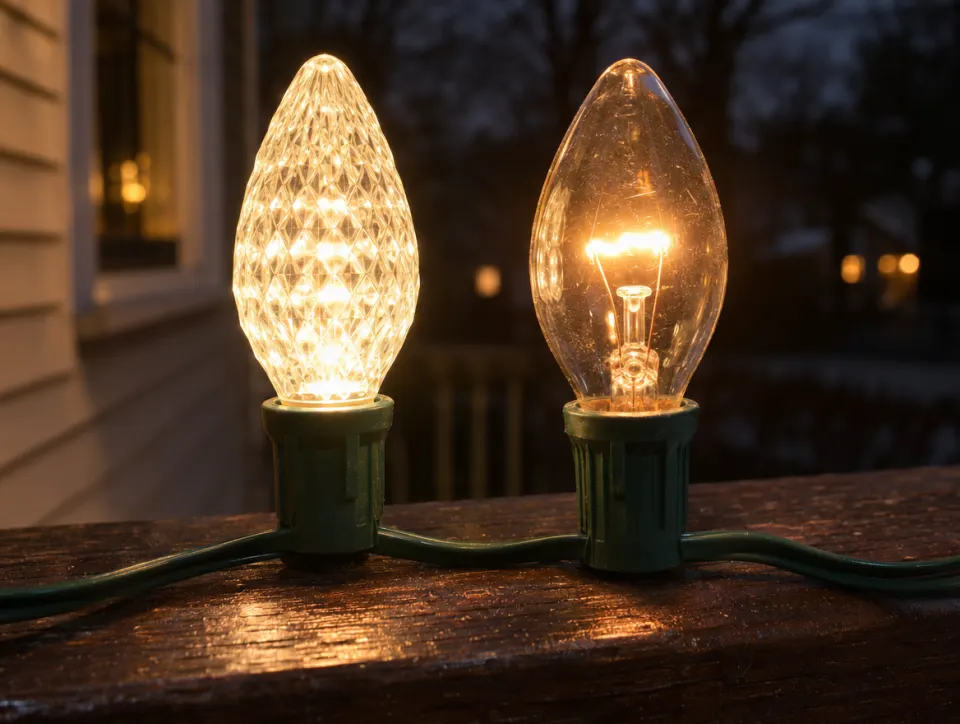
Older incandescent C9s have a warm, slightly golden glow that some people associate with how Christmas used to look. Early LEDs looked cold and blue next to them. Warm white LEDs have mostly closed that gap, and side by side on a roofline from the street, most people cannot tell. Multicolor LED C9s are bright and saturated, which suits a classic look on an older East Dallas house.
What we hang
We hang commercial-grade LED C9 bulbs on rooflines and LED mini lights on trees and shrubs. If you have your heart set on the look of incandescent, ask. We will show you a warm white LED next to an old bulb on your own house before we hang the full run.
Sources: U.S. Department of Energy: How Do Holiday Lights Work?.